
Blog Details
Paper Collated vs Plastic Collated vs Wire Collated Nails: Key Differences, Pros & Cons
Introduction
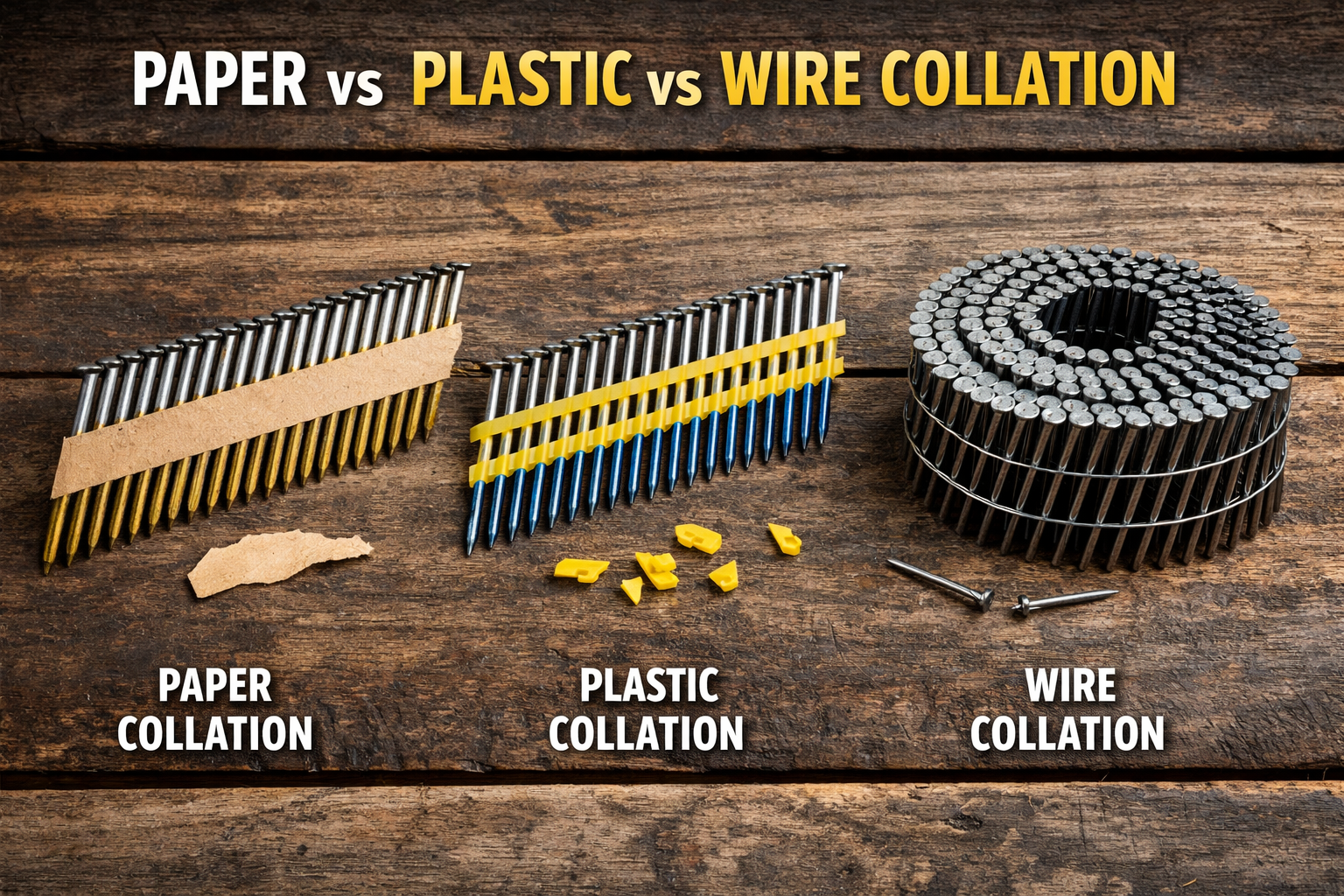
In modern construction and industrial applications, collated nails are widely used for efficient and continuous nailing with nail guns. Among the most common types are paper collated nails, plastic collated nails, and wire collated nails.
Each collation type has its own advantages, limitations, and ideal applications. Understanding these differences can help buyers choose the right nails for their projects.
What Are Collated Nails?
Collated nails are nails that are held together in strips or coils using specific materials such as paper, plastic, or wire. This design allows for fast loading and continuous operation in pneumatic nail guns, improving productivity on job sites.
1. Paper Collated Nails
Paper collated nails are connected with paper strips, typically arranged at angles such as 30° or 34°.
Advantages:
-
Environmentally friendly (no plastic waste)
-
Cleaner job site (paper disintegrates when fired)
-
Widely accepted in regulated markets (e.g., North America)
Disadvantages:
-
Less resistant to moisture
-
Higher cost compared to plastic collated nails
-
May weaken if stored improperly in humid environments
Applications:
-
Framing
-
Housing construction
-
Indoor structural work
2. Plastic Collated Nails
Plastic collated nails are held together by plastic strips or bands, commonly used in 0°, 15°, or 21° configurations.
Advantages:
-
Strong moisture resistance
-
More affordable
-
Good structural stability during transport and use
Disadvantages:
-
Produces plastic debris during nailing
-
Less environmentally friendly
-
Some job sites restrict their use
Applications:
-
General construction
-
Outdoor projects
-
High-humidity environments
3. Wire Collated Nails
Wire collated nails are connected using thin metal wires, and are most commonly used in coil nails.
Advantages:
-
Very strong and durable collation
-
Ideal for high-speed nailing operations
-
Less breakage during transport
-
High capacity (especially in coil form)
Disadvantages:
-
Slightly higher cost than plastic collation
-
Small wire remnants remain after firing
Applications:
-
Pallet manufacturing
-
Roofing
-
Siding
-
Industrial packaging
Comparison Table
Choosing the right collation type depends on your specific needs:
For environmentally conscious projects → Paper collated nails
For cost-effective and moisture-resistant use → Plastic collated nails
For high efficiency and heavy-duty applications → Wire collated nails
Paper collated nails are commonly used for framing due to their clean operation and compliance with building standards.
Yes, plastic collated nails are usually more cost-effective than paper or wire collated options.
Wire provides stronger binding, making it ideal for coil nails that require high capacity and durability during high-speed nailing.
No. Nail guns are designed for specific collation types and angles. Always confirm compatibility before purchasing.
Paper, plastic, and wire collated nails each serve different purposes in construction and industrial applications. By understanding their differences, buyers can select the most suitable option for performance, cost, and environmental considerations.
Feature
Paper Collated
Plastic Collated
Wire Collated
Material
Paper
Plastic
Steel Wire
Environmental Impact
High (eco-friendly)
Low
Medium
Moisture Resistance
Low
High
High
Strength
Medium
Medium
High
Cost
Higher
Lower
Medium
Debris After Firing
Minimal
Plastic fragments
Small wire pieces
Common Use
Framing
General construction
Coil nails, industrial
How to Choose the Right Collation Type?
FAQ
Q1: Which collation type is best for framing?
Q2: Are plastic collated nails cheaper?
Q3: Why are wire collated nails used for coil nails?
Q4: Do all nail guns support all collation types?
Conclusion
Powered by Shiny Industry CO., LTD